

◆
DON'T JUST KNOW. DO.
◆
65% OF NURSES REPORT BURNOUT
◆
ASK. ANSWER. ACT.
◆
CREDENTIAL GAPS DON'T ANNOUNCE THEMSELVES
◆
LINX FOR HEALTHCARE
◆
$289K PER 1% TURNOVER SHIFT
◆
BUILT FOR THE 6:45AM MOMENT
◆
AI EXECUTION ENGINE
◆ DON'T JUST KNOW. DO. ◆ 65% OF NURSES REPORT BURNOUT ◆ ASK. ANSWER. ACT. ◆ CREDENTIAL GAPS DON'T ANNOUNCE THEMSELVES ◆ LINX FOR HEALTHCARE ◆ $289K PER 1% TURNOVER SHIFT ◆ BUILT FOR THE 6:45AM MOMENT ◆ AI EXECUTION ENGINE
THE PROBLEM
YOUR TOOLS SEE THE GAP. THEY DON’T CLOSE IT.
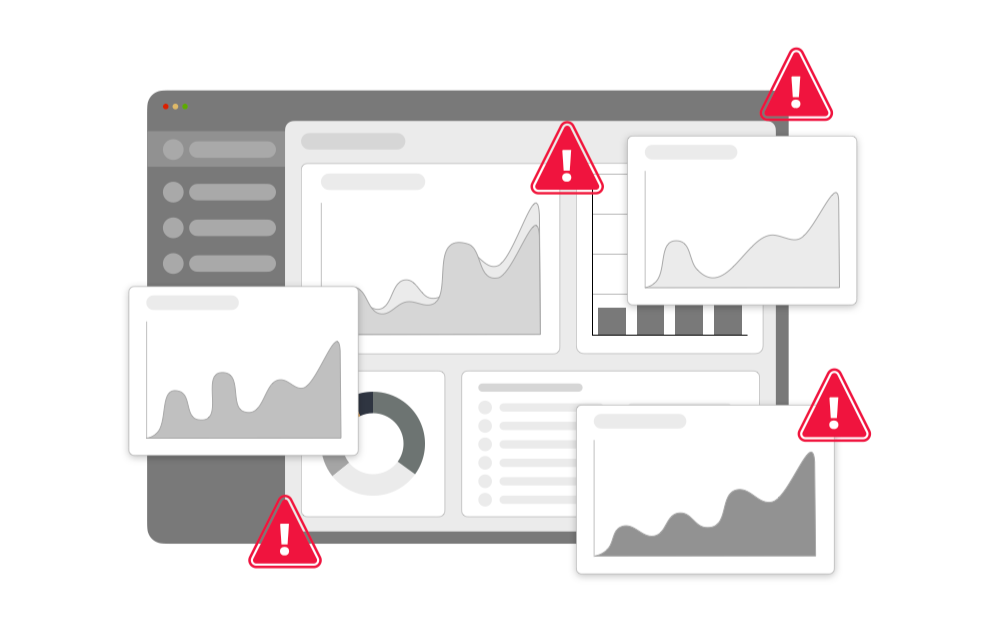
Your scheduling system knows who's on shift. Your credentialing tracker knows whose BLS expired. Your HRIS knows who was hired last month. None of them talk to each other, and none of them do anything about what they find. The work of figuring out what to do next, and who should do it, falls to whoever has time. In a hospital running at negative margins with 40% of its nurses considering the door, that gap has a cost.
THE PHONE CHAIN
Every call-off starts a manual search. The staffing coordinator opens the scheduling system, cross-references the float pool roster, checks the credentialing spreadsheet, and starts dialing. Forty-five minutes later, one shift is filled, and three more problems have gone unaddressed.
SPREADSHEET COMPLIANCE
HR and compliance teams build their own Excel trackers because the authorized systems are too cumbersome to use. Those spreadsheets are accurate as of whenever someone last had time to update them. Surveyors don't accept that distinction.
THE CREDENTIAL BLIND SPOT
A nurse's BLS expired eleven days ago. The scheduling system doesn't know. The charge nurse doesn't know. The assignment gets made anyway. Nobody finds out until someone looks — or until someone has to.
FRAGMENTED EMPLOYEE DATA
Getting a complete picture of one employee means opening three systems, running two reports, and calling someone who might have the answer. By the time the picture is assembled, it's already out of date.
THE RETENTION SIGNAL NOBODY CATCHES
At $61,110 to replace a single bedside RN, turnover isn't a workforce problem — it's a financial event. The nurses most at risk of leaving are invisible in the current system until they've already decided to go.
$289K
Per 1% shift in RN turnover. Every percentage point a hospital fails to move costs or saves that amount — annually, on top of everything else.
–0.6%
Median hospital operating margin in January 2026. In that environment, every hour a manager spends on a phone chain and every citation from a lapsed credential is a cost the organization cannot absorb.
22%
The share of hospitals confident they could produce a mandatory credential audit trail within 30 days. The other 78% find out what they're missing when a surveyor does.
40%
Of registered nurses intend to leave the profession or retire by 2027. The pipeline to replace them is already constrained. Nursing schools turned away 65,000 qualified applicants in 2023.
THE SOLUTION
THE ACTION LAYER.
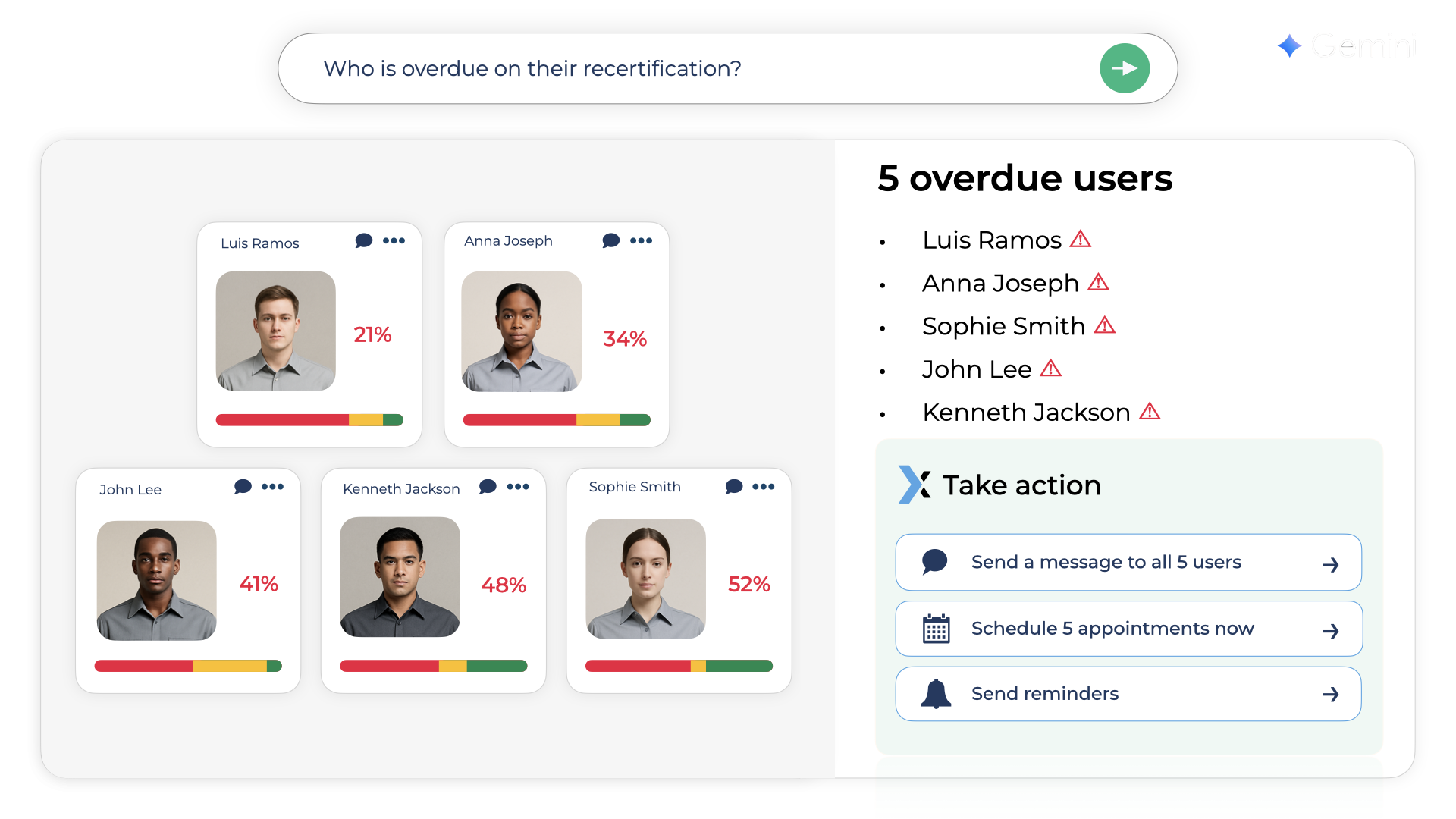
LINX isn't another dashboard. It's the execution layer that connects workforce data to the nurses, charge nurses, and operations leaders responsible for acting on it and lets them act directly inside the platform.
A
ASK
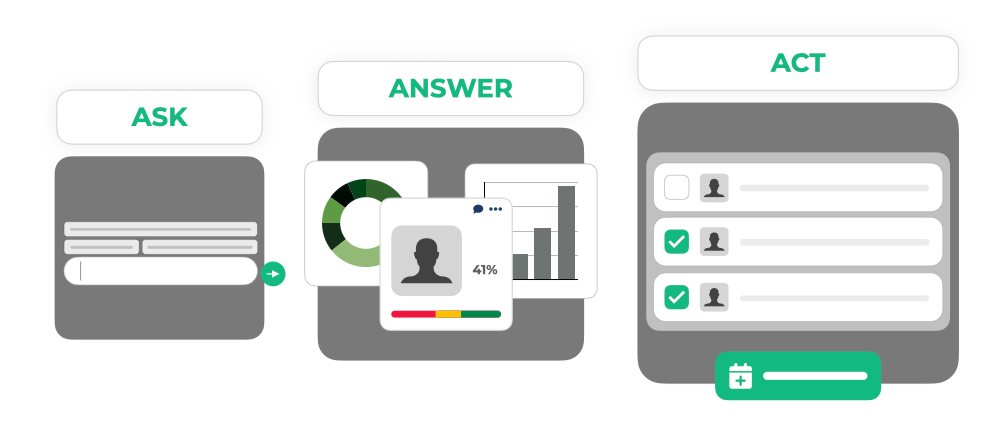
Consolidate schedules, credentials, certifications, compliance requirements, onboarding milestones, and career development records into one source of truth per person. Ask anything about your workforce's readiness status — by nurse, by unit, by shift, by certification type — in plain language. No report queue. No system switching. No waiting for someone to pull the data.
A
ANSWER
Surface who is credentialed for which unit, whose certification is expiring before the next survey window, which shifts are uncovered, and which nurses are showing the retention signals that precede a resignation. Priority-weighted, role-differentiated, and current as of this morning, not as of whenever the spreadsheet was last saved. No manual triage. No guesswork.
A
ACT
Broadcast the open shift to every qualified available nurse who won't trigger overtime. Send the credential renewal prompt directly to their phone. Route the policy acknowledgment to all fourteen nurses who haven't confirmed it yet, and track completion in real time. Notify. Schedule. Assign. Escalate. This is the step every other tool skips.
KEY CAPABILITIES
BUILT FOR HOW YOU OPERATE.
For a health system managing nurses, float pool staff, and operations leaders across units, shifts, and sites, the execution gap shows up the same way every time. LINX closes all of them simultaneously.

CONSOLIDATED DATA
Credentials, certifications, schedules, compliance requirements, onboarding milestones, and career development records are currently scattered across an HRIS, a credentialing system, a scheduling tool, and a spreadsheet nobody else can find. LINX has the full picture so a charge nurse, a compliance officer, or a staffing coordinator doesn't have to patch it together from five systems before the huddle starts.

ROLE-AWARE TASKING
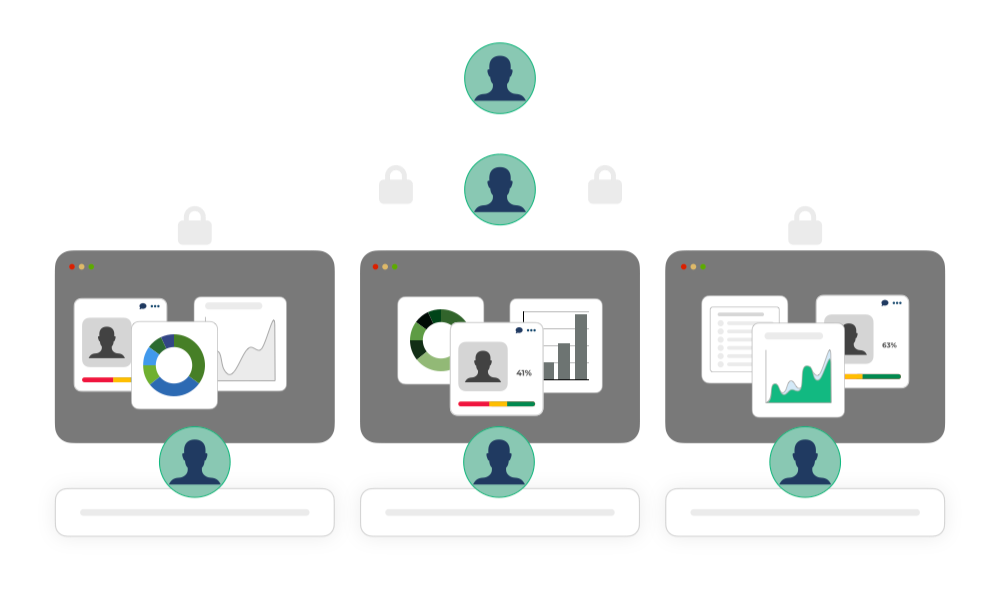
The floor nurse sees their schedule, their credential status, and the messages that require their action. The charge nurse sees their unit's staffing coverage, readiness flags, and incoming admissions. The CNO sees compliance gaps, turnover signals, and workforce readiness across every unit simultaneously. One system. Every role. No overlap, no gaps.

COMPLIANCE TRACKING & AUDIT TRAIL
Every license, certification, and competency validation tracked in real time and weighted by clinical priority, flagged before it lapses, and linked directly to the document that satisfies it. When a Joint Commission surveyor asks for the credential record of the nurse currently on shift in the cardiac ICU, the answer takes thirty seconds. Not thirty days. Walk into any survey with a complete, timestamped record already assembled.

LOCKED CLINICAL WORKFLOWS
In a hospital, improvisation isn't a workaround — it's a liability. LINX standardizes the workflows that cannot vary: credential submission, onboarding milestones, policy acknowledgment, shift qualification checks. Every step locked to the role. Every completion timestamped. Every gap surfaced before it becomes a finding, an incident, or an exit interview.

SMART SCHEDULING
LINX doesn’t only answer questions. It acts. Ask LINX to assign shift coverage or schedule outstanding safety inspections and it executes the task directly inside the platform. LINX manages the calendar across every staffing mode — admin-assigned, auto-scheduled, or self-service shift pickup — filtered by credential status, hour threshold, and unit qualification before a coordinator ever sees the list. When a call-off hits at 5:47am, the shift broadcasts to every qualified available nurse automatically.

BUILT-IN MESSAGING
Charge nurses reach float pool staff. Compliance officers reach every nurse with an outstanding acknowledgment. Operations leaders distribute policy updates that recipients confirm with a single tap on their phones, between patients, without a desktop login. No context lost. No critical updates buried in email. No follow-up call to find out if anyone actually read it.
SECURITY & COMPLIANCE
audit-ready isn’t a state. it’s a system.
Every user sees exactly what their role requires — and nothing it doesn't. In an environment where healthcare data breaches hit an all-time high in 2024 and a HIPAA Security Rule overhaul mandates enforceable standards by late 2026, access governance isn't a feature. It's a clinical safety requirement.

Role-Based Access Control (RBAC)
Permissions mapped to role, unit, and organizational tier, not assigned individually and forgotten when someone's responsibilities change. The platform adapts to each role automatically. No over-sharing. No access bottlenecks. No unauthorized eyes on sensitive workforce data.
Full Audit Trail
Every credential submission, requirement completion, policy acknowledgment, and shift assignment captured automatically with a timestamp. When a Joint Commission surveyor requests documentation for a named staff member, the record is there — complete, current, and retrievable in seconds. When the HIPAA Security Rule overhaul takes effect, LINX's audit architecture is already built to meet it.
SSO / SCIM & Encryption
Enterprise authentication, automated identity management, and full encryption at rest and in transit. Access provisioning and deprovisioning tied directly to role changes. Aligned with HIPAA security standards and the incoming mandate for enforceable cybersecurity controls across the healthcare workforce.
On-Premise Deployment
For health systems operating in environments where workforce data cannot leave the building, LINX deploys fully on-premise without sacrificing platform capability. Full functionality. Fully isolated. For the organizations where that distinction is non-negotiable.
LINX X HEALTHCARE