
◆
SERVICE-DISABLED VETERAN-OWNED
◆
CMMC-ALIGNED
◆
ASK. ANSWER. ACT.
◆
BUILT WITH THE 932ND AIRLIFT WING
◆
LINX FOR DEFENSE
◆
ROLE-BASED ACCESS CONTROL
◆ SERVICE-DISABLED VETERAN-OWNED ◆ CMMC-ALIGNED ◆ ASK. ANSWER. ACT. ◆ BUILT WITH THE 932ND AIRLIFT WING ◆ LINX FOR DEFENSE ◆ ROLE-BASED ACCESS CONTROL
THE PROBLEM
YOUR TOOLS SEE THE GAP. THEY DON’T CLOSE IT.
The U.S. military has more data, more dashboards, and more reporting requirements than at any point in its history. None of it closes the gap between knowing your readiness status and actually fixing it. Company commanders spend a week every month feeding reports that don't inform a single decision. NCOs track certifications in binders that nobody audits until it's too late. S3 shops manually deconflict training calendars in spreadsheets while the ranges sit empty and the pipeline backs up. The information exists. The action doesn't follow. LINX closes it.
SPREADSHEET SPRAWL
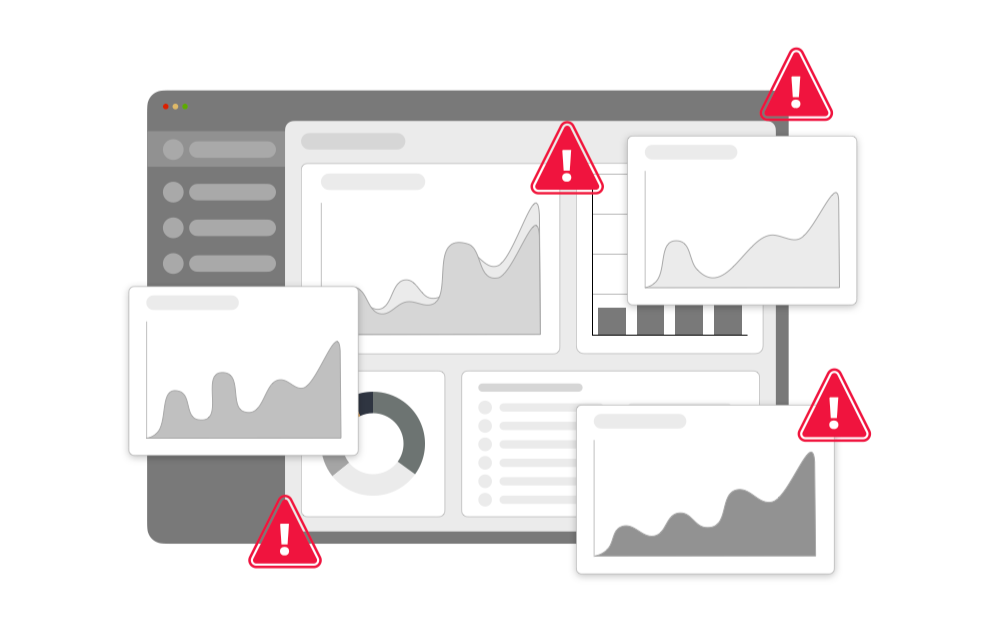
Every additional duty gets its own tracker. Every compliance program gets its own binder. Every reporting requirement gets its own slide. Company-level leaders are currently managing 75 or more required additional duties — each demanding certifications, inspections, and continuity documentation — with no single system that owns the aggregate. The burden grows by accretion. Nobody sees the total until it's already too late.
PAPER MANNING
Units look fully staffed on the morning roster. They aren't mission-ready. Training pipeline bottlenecks, lapsed certifications, and real-time qualification gaps create a version of the force that exists on paper and nowhere else. Commanders can't see the difference between who's present and who's actually deployable — not in real time, not at a glance, not without pulling from four systems that don't talk to each other.
THE POWERPOINT INDUSTRIAL COMPLEX
Staff officers exist to plan and analyze. In practice, they spend the majority of their working hours formatting slides for the Battle Update Brief. The briefing culture that was supposed to keep commanders informed has become the single largest drain on the people responsible for operational thinking. The deck gets built. The decision still waits.
COMPOUNDING EXECUTION RISK
The civilian workforce contracted, removing roughly 84,000 support personnel from the DoD. The reporting requirements didn't shrink with them. Operations leaders are now absorbing administrative functions that used to belong to civilian staff — on top of everything they were already carrying. The same number of requirements. Significantly fewer people to execute them. Something gives. It's usually warfighting readiness.
1 WEEK
Lost every month — per command team — to mandatory reporting. Not analysis. Not planning. Reports that exist to demonstrate compliance and inform nobody's decision.
75+
Required additional duties placed on a single company commander. Each one demands its own certifications, inspections, and continuity binders. No single system owns the total. No single leader sees the aggregate until it breaks.
$2.5B
Lost annually across the DoD to outdated, non-interoperable IT systems. Personnel re-entering the same data into three and four disconnected platforms. Productivity that doesn't come back.
84,000
Civilian personnel removed from the DoD workforce since 2025. The reporting requirements stayed. The people who used to help carry them didn't.
THE SOLUTION
THE ACTION LAYER.
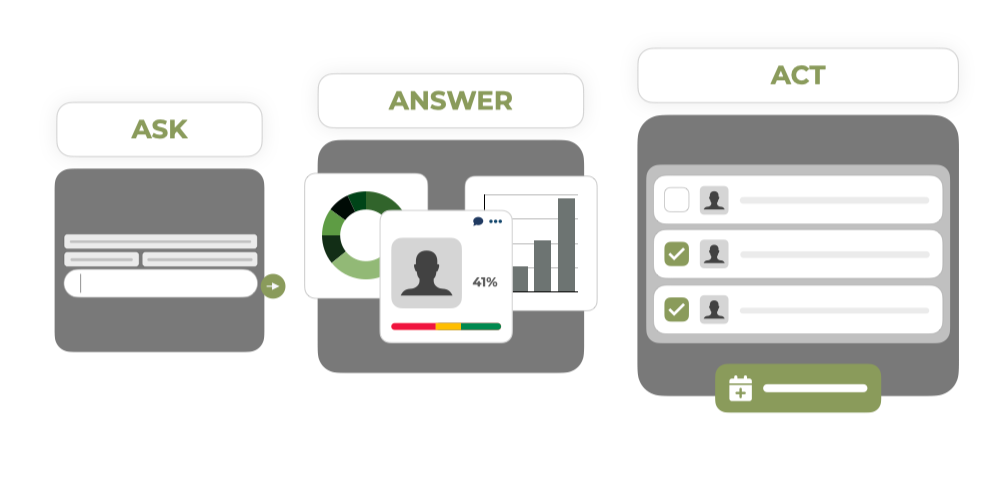
LINX isn't another dashboard. It's the execution layer that connects readiness data to the commanders, operations officers, and NCOs responsible for acting on it and lets them act directly inside the platform.
A
ASK
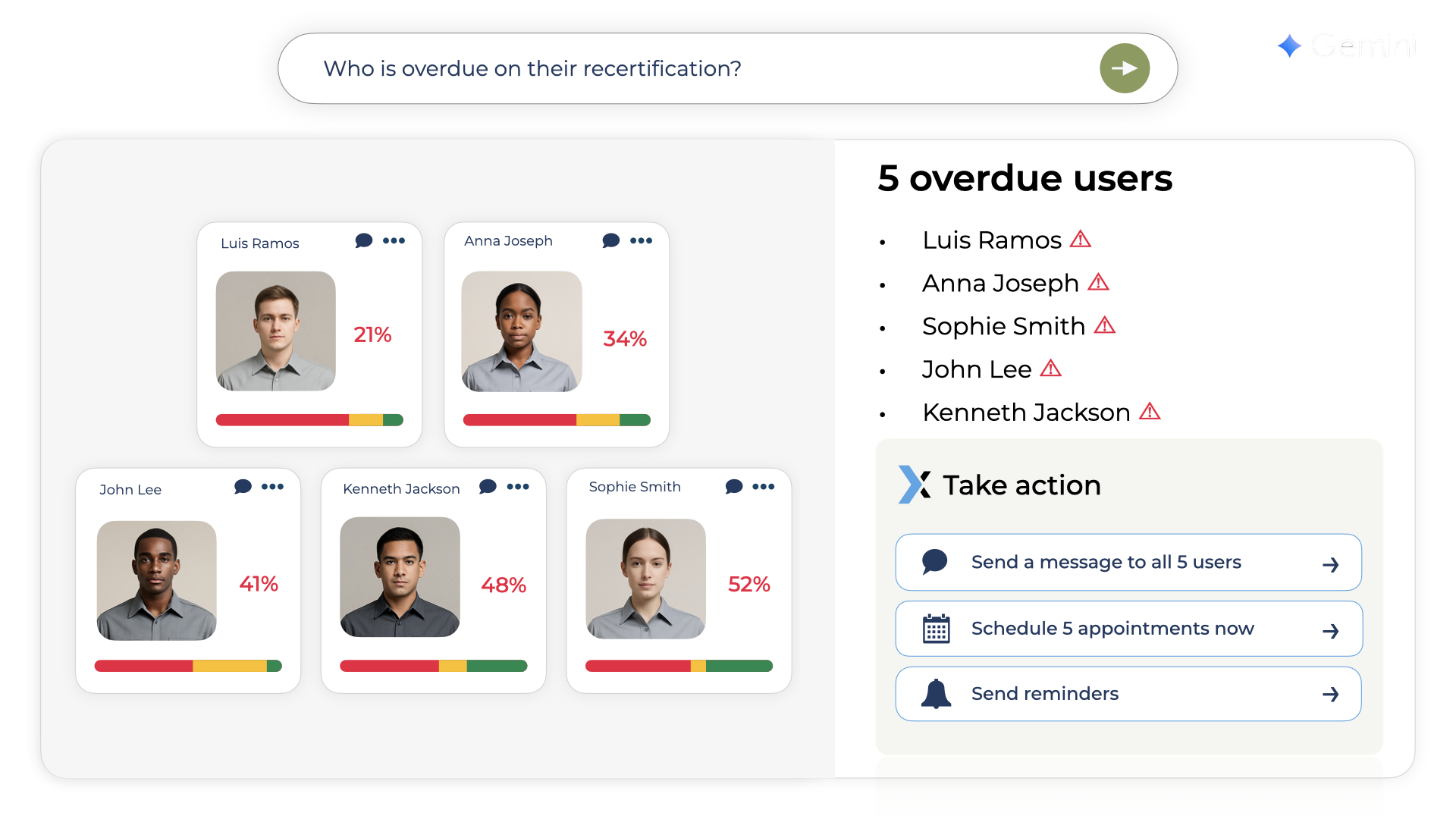
Consolidates personnel records, certifications, training completions, readiness requirements, schedules, and unit communications into one source of truth. An S3 can query the entire battalion's readiness status in plain language. A company commander can pull every overdue qualification by MOS in seconds. No report requests. No platform switching. No waiting.
A
ANSWER
Surfaces what's missing, who owns it, and when it has to be resolved — with visual data that doesn't require a staff officer to format it into a slide. Priority-weighted readiness gaps rise to the top automatically. Commander's Critical Information Requirements land where they belong: in front of the commander. No manual triage. No meetings to decode what the dashboard means.
A
ACT
Delivers the task to the right person at the right rank and lets them execute inside the platform. Schedule a qualification range. Assign a remediation task. Send an actionable message an NCO can acknowledge, sign up for, or complete without leaving the interface. Notify. Schedule. Assign. Escalate. This is the step every other tool skips.
KEY CAPABILITIES
BUILT FOR HOW YOU OPERATE.
For a force managing personnel across every rank, unit, and readiness cycle – the execution gap shows up the same way every time. LINX closes all four openings simultaneously.

SMART SCHEDULING
LINX manages the calendar — auto-deconflicting range allocations, syncing the six-week training window across battalion and company levels, and allowing personnel to self-select into qualification slots without a coordinator chasing confirmations. When scheduling breaks down, the training pipeline backs up. When the pipeline backs up, paper manning gets worse. LINX stops it before it starts.

CONSOLIDATED DATA
LINX consolidates MOS qualifications, certification status, training history, readiness requirements, and unit communications into a single authoritative record per service member. LINX has the full picture so commanders and S3s don't have to patch it together from five systems before the morning BUB.

COMPLIANCE TRACKING & AUDIT TRAIL
LINX captures the full audit trail automatically, with no additional documentation burden placed on the leaders generating the activity. Walk into any Inspector General review with a complete, timestamped record already assembled.

BUILT-IN MESSAGING
LINX messaging doesn't just deliver the information — it delivers the action. Recipients acknowledge a policy, sign up for a range slot, or complete a task directly inside the message. No context lost. No critical updates buried in email. No follow-up required to confirm the order landed.

ROLE-AWARE TASKING
An NCO sees their task list and qualification status. A company commander sees team readiness gaps and overdue requirements across their entire formation. One system. Every rank. No overlap, no gaps. The right information reaches the right level of the chain of command without requiring a staff officer to reformat it for each audience.

GOVERNED WORKFLOWS
LINX locks workflows to role and rank, ensuring that readiness processes run the same way every time regardless of who's executing them. New NCO in the S3 shop. Rotating XO. First-time company commander. The workflow doesn't change because the person did. Standardized. Role-locked. No improvisation where the mission can't afford it.
SECURITY & COMPLIANCE
SECURITY THAT MATCHES YOUR COMMAND STRUCTURE.
Every user sees exactly what their rank and role authorize — and nothing they don't. In an environment where information triage is a command function and data sovereignty is a readiness requirement, LINX doesn't treat security as a feature. It treats it as architecture.
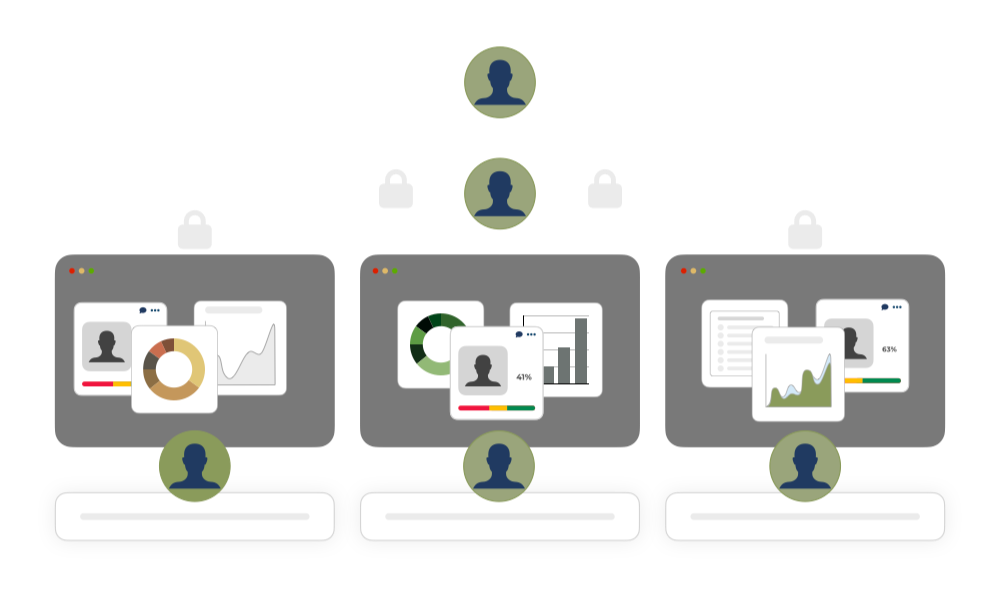

Role-Based Access Control (RBAC)
Permissions mapped to rank, role, and command level — not assigned individually, not managed manually. Every level of the chain of command operates inside a permission envelope that reflects their authority automatically, without administrative overhead. No spillage. No access requests. No information bloat obscuring the CCIRs that actually matter.
Full Audit Trail
Every assignment logged. Every completion timestamped. Every escalation recorded. When an Inspector General review is called or a readiness inquiry lands on the XO's desk, the record exists — complete, unambiguous, and already assembled. LINX doesn't create documentation burden. It captures the activity your force is already generating and makes it audit-ready without asking anyone to do extra work.
SSO / SCIM & Encryption
Enterprise authentication and identity management via SSO and SCIM, with full encryption at rest and in transit. LINX is architected for CMMC alignment and built to operate inside the defense enterprise security stack, not alongside it as an exception that requires manual workarounds. Your identity infrastructure governs access. Your data stays governed.
On-Premise Deployment
LINX runs fully on-premise in isolated environments where data cannot leave the wire. No vendor-hosted cloud dependency. No operational patterns visible to commercial engineers. No data rights ambiguity. Your readiness data, your formation's qualifications, your unit's scheduling and communications — sovereign, contained, and fully functional without a persistent external connection. For units operating in contested or communications-degraded environments, the platform doesn't become a liability when the network goes down.
LINX X DEFENSE & READINESS